What are all the cryptocurrencies
What are Bitcoins used for? Bitcoins can be used to buy merchandise anonymously. In addition, international payments are easy and cheap because bitcoins are not tied to any country or subject to regulation rhode isla. Small businesses may like them because there are no credit card fees. Some people just buy bitcoins as an investment, hoping that they’ll go up in value.
Cryptography is the second component. This is the process of encrypting data and changing it to an unreadable format that only someone who knows the secret key can read or decrypt. This technology, which uses a complex public and private digital key system, safeguards cryptocurrencies like Bitcoin.
Every cryptocurrency is a form of digital currency built on blockchain technology that has to be understood as a sort of virtual currency. Our everyday understanding of money is based on how we believe the value of a different currency is determined by the nation-states and banks that issue it. When we understand cryptocurrency, we realize that this isn’t the case at all. Cryptocurrencies don’t have any value in and of themselves, but instead, gain value based on people believing that they are valuable.
Are all cryptocurrencies the same
Stablecoins are cryptocurrencies designed to maintain a fixed value by being pegged to traditional assets like fiat currencies. They offer stability in a market known for volatility, making them ideal for trading, transferring value, and preserving capital. Although built on blockchain networks, stablecoins are more commonly used for practical financial purposes rather than speculative investment.
Cryptocurrencies like Bitcoin have exploded in value, but they are largely used for speculation or to buy other speculative assets. Although there have been some signs of merchant adoption in countries like El Salvador, the high volatility and complexity of these currencies make them impractical for most daily applications.
Digital currencies also enable instant transactions that can be seamlessly executed across borders. For instance, someone in the United States may make payments to a counterparty in Singapore using digital currency, provided they are both connected to the same network.
Maybe it will be weird for you to hear that some of the most popular crypto money are limited, and there can’t be more than that. For example, there are 21 million Bitcoins circulating over the market, and that’s the upper limit, and the developers won’t ever let one more coin to be available. The same goes for the Bitcoin cash too. On the other hand, Ethereum and Litecoin don’t have a limit, and the supply is getting bigger every day, making them more available for the people. But, at the same time, it means they can’t really reach very high rates. This is another one important difference between these currencies – if the supply is determined, they are getting more worthy every day. But, if there are uncountable coins, their worth will never be stable.
This website contains certain forward-looking statements that are subject to various risks and uncertainties. Forward-looking statements are generally identifiable by use of forward-looking terminology such as “may,” “will,” “should,” “potential,” “intend,” “expect,” “outlook,” “seek,” “anticipate,” “estimate,” “approximately,” “believe,” “could,” “project,” “predict,” or other similar words or expressions. Forward-looking statements are based on certain assumptions, discuss future expectations, describe future plans and strategies, or state other forward-looking information. Our ability to predict future events, actions, plans or strategies is inherently uncertain and actual outcomes could differ materially from those set forth or anticipated in our forward-looking statements. You are cautioned not to place undue reliance on any of these forward-looking statements.
Digital currencies do not have physical attributes and are available only in digital form. Transactions involving digital currencies are made using computers or electronic or digital wallets connected to the internet or designated networks. In contrast, physical currencies, such as banknotes and minted coins, are tangible, meaning they have definite physical attributes and characteristics. Transactions involving such currencies are made possible only when their holders have physical possession of these currencies.
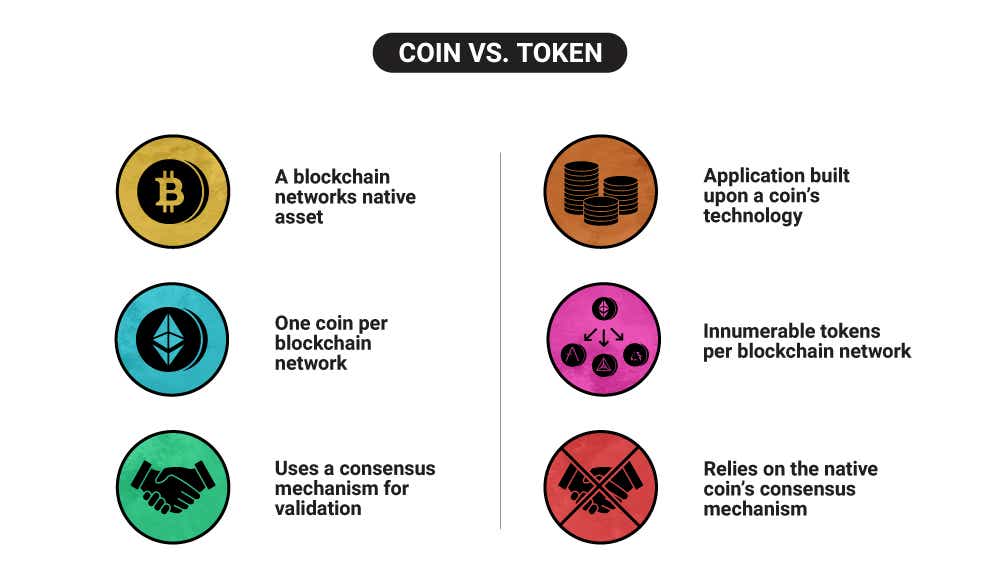
Do all cryptocurrencies use blockchain
For all of its complexity, blockchain’s potential as a decentralized form of record-keeping is almost without limit. From greater user privacy and heightened security to lower processing fees and fewer errors, blockchain technology may very well see applications beyond those outlined above. But there are also some disadvantages.
There are both public and private blockchains. In a public blockchain, anyone can participate meaning they can read, write or audit the data on the blockchain. Notably, it is very difficult to alter transactions logged in a public blockchain as no single authority controls the nodes.
Not all blockchains are 100% impenetrable. They are distributed ledgers that use code to create the security level they have become known for. If there are vulnerabilities in the coding, they can be exploited.
Blockchain is a decentralized digital ledger that securely stores records across a network of computers in a way that is transparent, immutable, and resistant to tampering. Each “block” contains data, and blocks are linked in a chronological “chain.”
Because of this distribution—and the encrypted proof that work was done—the blockchain data, such as transaction history, becomes irreversible. Such a record could be a list of transactions, but private blockchains can also hold a variety of other information like legal contracts, state identifications, or a company’s inventory. Most blockchains wouldn’t “store” these items directly; they would likely be sent through a hashing algorithm and represented on the blockchain by a token.